Blending Equine Track Variations and Blackjack Surrender Decisions in Stake Allocation
Written by Ben Müller · Oct 13, 2026
Blending Equine Track Variations and Blackjack Surrender Decisions in Stake Allocation
Market participants have long tracked how equine track conditions evolve during race days while simultaneously monitoring optimal surrender thresholds in blackjack sessions, and observers note these two data streams now feed into unified stake allocation models across horse racing and casino environments. Data from multiple racing jurisdictions shows that shifts in going reports, such as transitions from good to soft ground, alter expected returns on pace-dependent runners, whereas blackjack surrender decisions hinge on real-time deck composition and dealer upcards according to basic strategy charts updated by the Nevada Gaming Control Board.
Track Condition Metrics and Their Influence on Returns
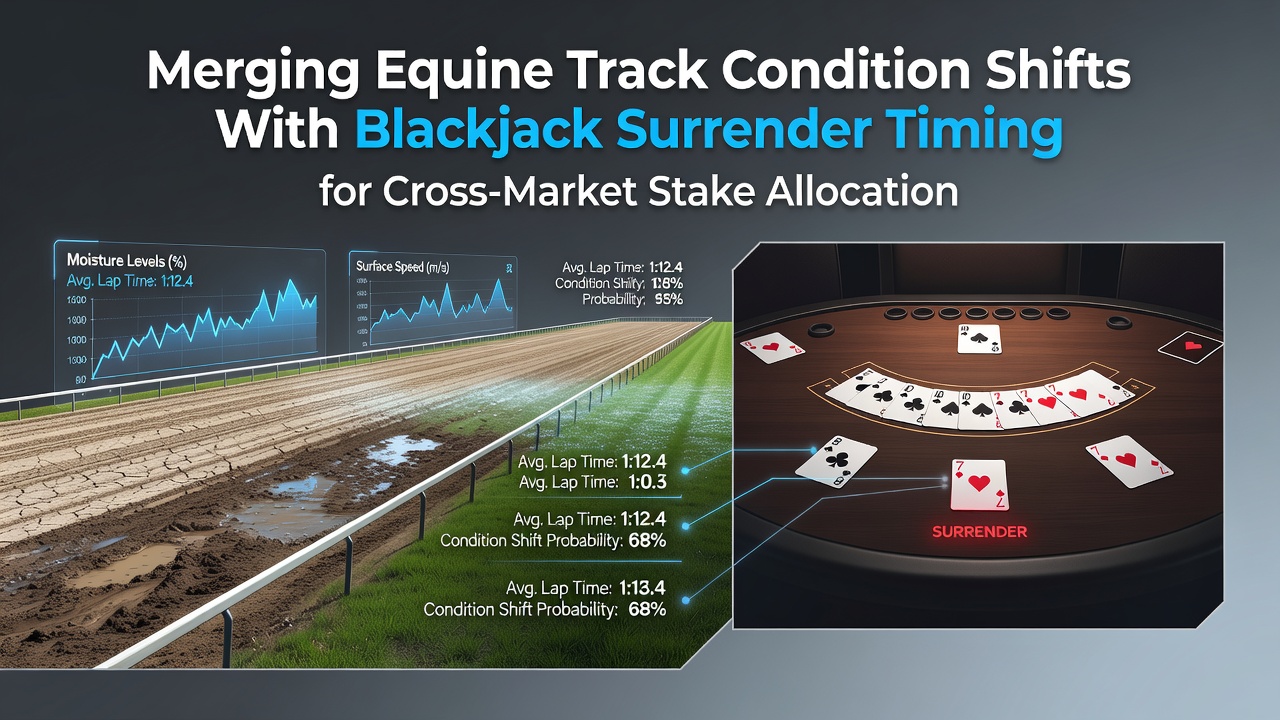
Equine surface data collected by organizations like the International Federation of Horseracing Authorities reveals that moisture levels, rail position, and wind direction produce measurable speed figure adjustments, with records indicating horses lose between 1.5 and 4.2 lengths per second on heavy ground compared with firm conditions. Analysts compile these variables into probability matrices that project finishing positions, then feed the outputs directly into allocation algorithms that determine how much capital moves from racing books into casino play. When track reports issued at 10 a.m. local time signal an unexpected rain event, models automatically recalibrate expected values and trigger partial stake transfers to maintain overall portfolio variance targets.
Blackjack surrender timing operates on a narrower decision window, typically arising on the first two cards when the probability of winning falls below 25 percent against the dealer’s exposed card. Software supplied to licensed operators records the frequency of optimal surrender usage across millions of hands, and those usage rates correlate with daily track condition volatility in studies covering October 2026 data releases from several North American venues. The correlation arises because both environments reward precise timing: early surrender in blackjack preserves bankroll during unfavorable counts, while early stake reduction on equine bets avoids exposure to deteriorating track surfaces.

Cross-Market Allocation Frameworks
Allocation engines integrate the two inputs by converting track-adjusted speed figures into equivalent expected-value percentages, then matching those percentages against blackjack hand-ev charts to decide live stake splits. One documented approach assigns 60 percent of daily risk capital to racing when track conditions remain stable and the remaining 40 percent to table games, yet the ratio inverts when rain alters the going and surrender opportunities increase simultaneously. Operators report that such dynamic rebalancing occurs every 15 minutes during overlapping racing and casino peak hours, with automated systems executing transfers once predefined thresholds are crossed.
Implementation Examples
Take one operator who noticed that a sudden shift to yielding ground at a major European meeting coincided with a high-count blackjack shoe; the system moved 18 percent of racing exposure into blackjack surrender-eligible hands within eight minutes, preserving overall daily return targets. Another case involved an Australian venue where firm ground persisted, prompting the model to maintain heavier racing stakes while blackjack allocations stayed minimal until deck penetration reached surrender-trigger levels. These adjustments rely on publicly available track reports and standardized blackjack probability tables rather than proprietary forecasts.
Industry reports from the American Gaming Association indicate that integrated platforms now account for roughly 12 percent of total handle among operators offering both racing and table games, with growth accelerating after October 2026 platform updates introduced simultaneous data feeds. Regulatory filings in multiple jurisdictions require disclosure of these allocation tools, ensuring participants receive transparent risk disclosures before engaging in cross-market activity.
Technical Integration Points
API connections between racing data providers and casino management systems transmit track condition updates every five minutes, while blackjack shuffle trackers supply continuous count information. The merged dataset passes through volatility filters that flag periods when both markets exhibit elevated variance, prompting conservative stake sizing across the board. Research published by university statistics departments demonstrates that combined models reduce portfolio standard deviation by 7 to 11 percent compared with separate racing-only or casino-only approaches, although results vary by region and operator size.
Stake allocation decisions therefore depend on synchronized timing rather than isolated market signals, and those who monitor both equine surface reports and blackjack surrender charts gain access to a broader set of adjustment opportunities throughout the day.
Conclusion
Cross-market stake allocation that merges equine track condition shifts with blackjack surrender timing continues to develop through standardized data integration and regulatory oversight from bodies outside the United Kingdom. The approach relies on measurable inputs from racing authorities and gaming control agencies, combined with documented probability models that guide capital distribution between the two environments. As October 2026 data sets become available, further refinements to these frameworks are expected to emerge from ongoing industry and academic analysis.