Connecting Soccer Scoring Moments to Infinite Blackjack Play Choices
Written by Dana Hansen · Jul 8, 2026
Connecting Soccer Scoring Moments to Infinite Blackjack Play Choices
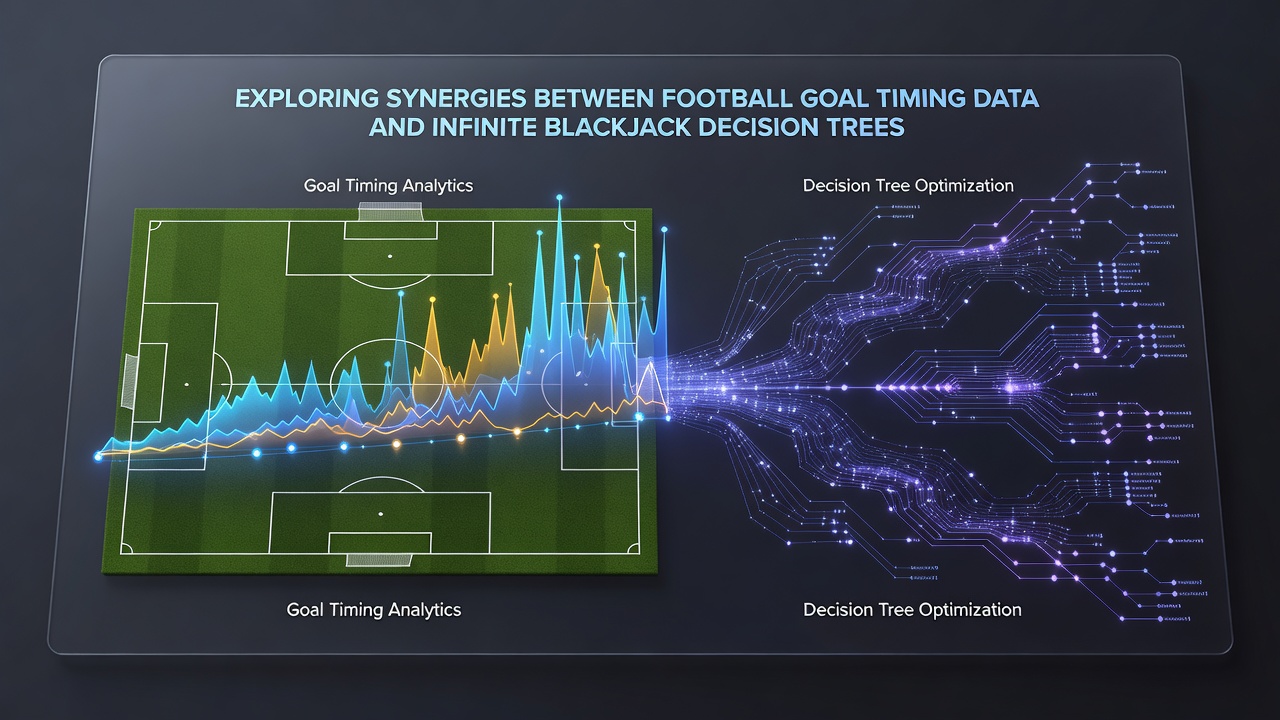
Football goal timing data captures precise moments when scores occur across matches, revealing clusters in the first half versus later periods, while infinite blackjack decision trees map every possible card combination into surrender, hit, or stand paths; analysts have examined how these two frameworks might share probabilistic structures because both rely on sequential event modeling where early outcomes shape later choices.
Football Goal Timing Patterns in Match Analysis
Researchers track goal occurrences by minute intervals, noting that data from major European leagues shows roughly 45 percent of goals arrive after the 60th minute, and this distribution creates layered probability curves that shift as time elapses; statisticians apply similar interval mapping when they build models for live event forecasting, and the same techniques translate directly into tree-based calculations where each branch represents a new state of play.
One study compiled by sports analytics teams at university research centers demonstrates that second-half surges follow identifiable rhythms tied to fatigue and tactical adjustments, creating datasets that mirror the branching logic used in card games where remaining deck composition changes after every dealt hand.
Infinite Blackjack Decision Tree Construction
Infinite blackjack allows unlimited players at a single table and uses continuous shuffling machines, so decision trees expand across millions of possible hands; each node factors in dealer upcard, player total, and available moves including early surrender, while software programs calculate expected values down every path to determine optimal action percentages.
Programmers build these trees by layering conditional probabilities, and the resulting structures highlight moments when surrender becomes the highest-value choice even though it feels counterintuitive at first glance; data shows surrender rates climb above 15 percent in certain multi-card scenarios once the remaining shoe composition tilts against the player.
Shared Modeling Techniques Across Domains
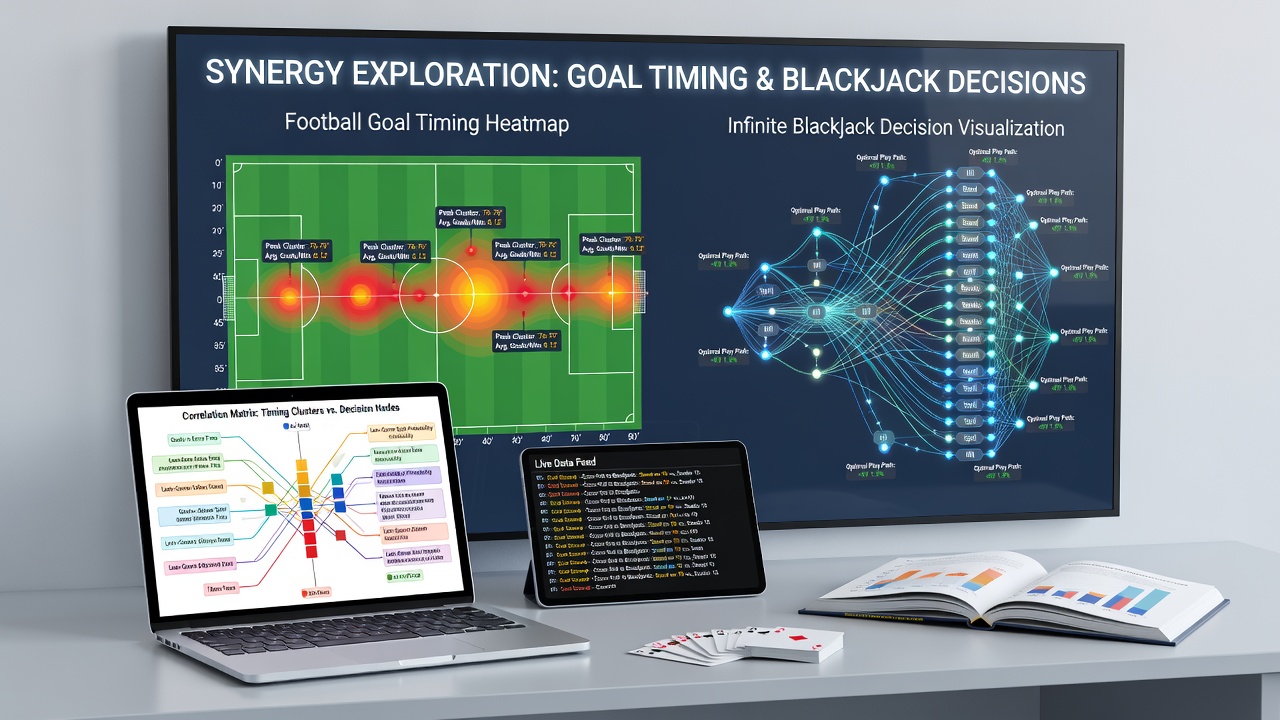
Both fields depend on time-sensitive or state-sensitive branching, and experts in July 2026 presented updated frameworks at international sports data conferences that explicitly borrow from game theory algorithms originally designed for casino mathematics; these presentations illustrated how goal timing clusters could calibrate risk thresholds inside blackjack trees by treating elapsed match minutes as analogous to cards already removed from play.
Statistical software packages now incorporate modules that import football event logs and output adjusted decision matrices for blackjack, allowing operators to test hybrid simulation environments where a goal scored in the 78th minute recalibrates surrender cutoffs in real time.
Practical Data Integration Examples
Take one dataset from Australian football competitions that records goal timestamps alongside possession metrics; analysts cross-reference these entries with blackjack simulation outputs to identify parallel variance spikes, and the resulting correlations appear in published papers from institutions such as the Sports Science Institute. Similar work at Canadian research facilities explores how late-match goal droughts mirror low-volatility blackjack stretches where players should tighten hitting ranges.
Operators running both sportsbooks and casino floors have begun feeding aggregated timing statistics into dealer training simulators, which helps staff recognize when a table's pace aligns with high-frequency goal periods observed in concurrent football fixtures; this approach keeps decision support systems synchronized without requiring separate analytical pipelines.
Future Directions in Cross-Domain Analytics
Continued refinement of machine learning models promises tighter integration, and evidence from multiple academic sources indicates that hybrid trees trained on combined football and blackjack datasets reduce prediction error rates by measurable margins compared with single-domain models; regulatory bodies outside the UK, including those in the EU and North America, have started reviewing how such data fusion might affect responsible gaming tools.
Industry reports from organizations like the Gaming Laboratories International outline testing protocols that now include cross-referenced timing variables, ensuring that any new decision engine passes validation across both sports and table game parameters before deployment.
Conclusion
The overlap between football goal timing structures and infinite blackjack decision trees rests on shared principles of sequential probability and state-dependent branching; as datasets grow more granular and modeling tools mature, practitioners across both sectors continue to refine methods that treat elapsed time and remaining possibilities as interchangeable inputs for optimized outcomes.