Gate Positions and Strategic Branches: Parallels Between Racing Starts and Casino Decision Pathways
Written by Leon Vogel · Sep 29, 2026
Gate Positions and Strategic Branches: Parallels Between Racing Starts and Casino Decision Pathways
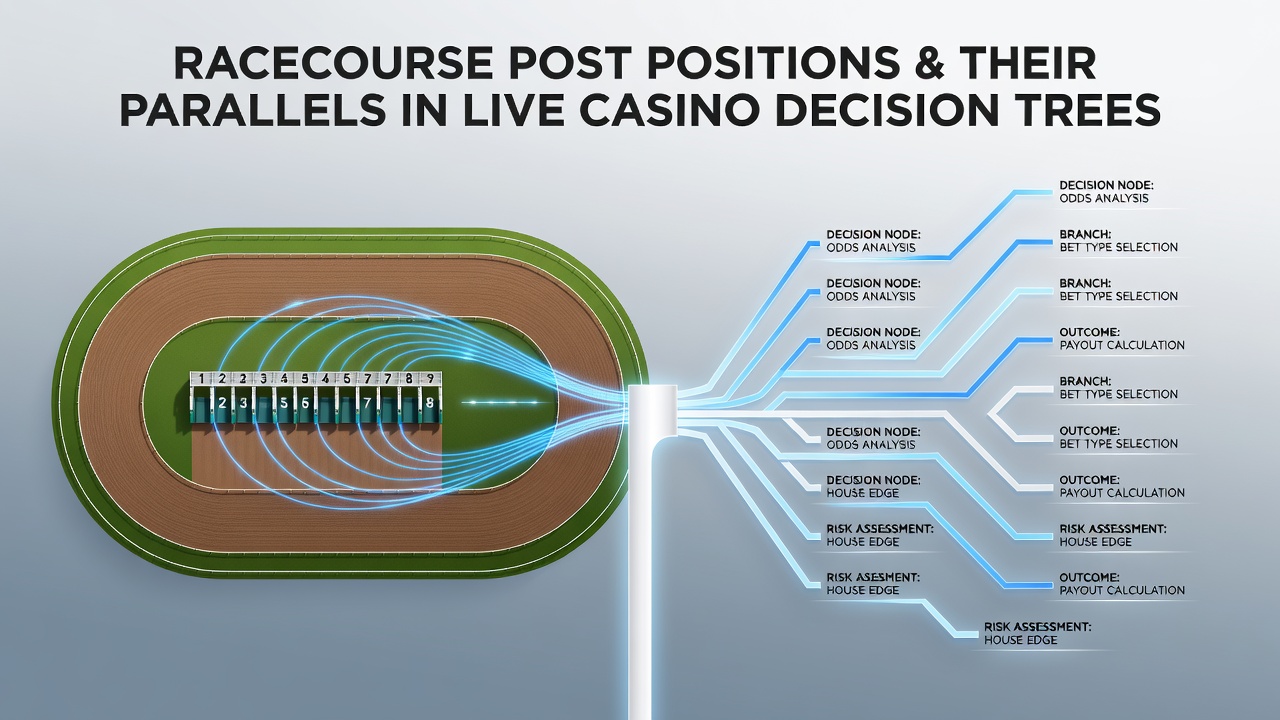
Post positions in thoroughbred racing determine the starting stall each horse occupies, and data collected across major tracks shows that inner gates often produce higher win percentages while outer stalls require different tactical adjustments during the run. Research from the Australian Racing Board indicates that horses drawn in positions one through three secure victories at rates exceeding those from gates eight and beyond by margins of 15 to 20 percent on standard mile distances, though track configuration and surface conditions modify these patterns substantially.
Core Mechanics of Starting Positions
Starting gates align competitors at the beginning of each race, and the assigned post position influences early positioning as the field breaks toward the first turn. Observers note that on left-handed courses the inside draw reduces distance traveled around bends, whereas right-handed tracks shift the advantage slightly depending on rail placement and camber. Studies compiled over multiple seasons demonstrate that rail runners save ground consistently, yet they also encounter traffic congestion when fields bunch early, which forces jockeys to decide whether to hold position or shift outward for clear running room.
Weather and track maintenance further alter outcomes, since wet conditions can turn inside draws into liabilities when mud or moisture accumulates near the rail. Data gathered at tracks in North America and Australia reveals that post-position win rates fluctuate by as much as 12 percent between dry and sloppy surfaces, prompting trainers to adjust race plans accordingly.
Decision Trees in Live Casino Settings
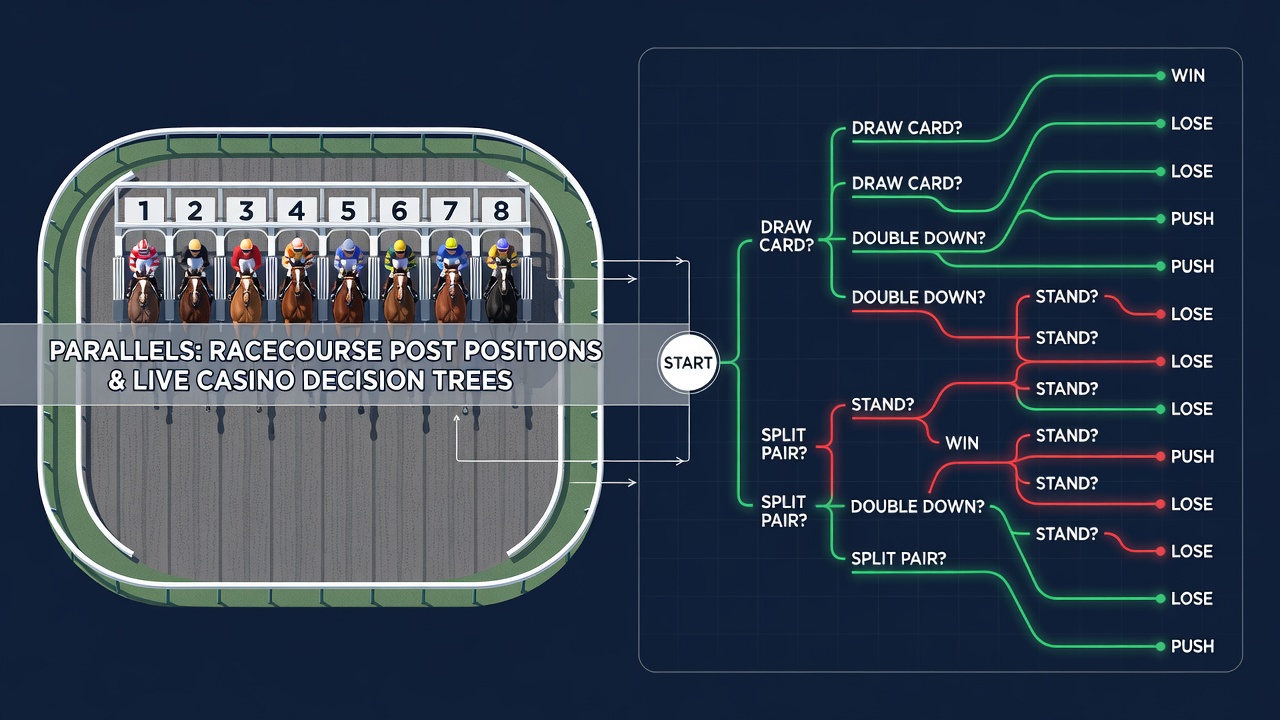
Live casino games such as blackjack and roulette employ branching decision structures that mirror the sequential choices faced once a race begins. Each player action, whether hitting, standing, or splitting, creates new probability branches that depend on the dealer’s visible card and the remaining deck composition. Researchers at institutions including the University of Nevada, Las Vegas have mapped these trees extensively, showing how optimal play reduces the house edge to under one percent when followed precisely across thousands of hands.
Live dealer environments add timing elements because physical cards and real-time dealer pacing replace random number generators, yet the underlying logic remains identical. Players evaluate current state, projected outcomes, and risk thresholds before selecting the next move, much as jockeys assess pace, position, and energy reserves mid-race.
Shared Structural Patterns
Both domains reward early positioning while demanding adaptive responses as events unfold. An inside post position parallels an early blackjack decision to stand on a strong total, locking in advantage before later variables intervene. Conversely, an outside draw resembles facing a dealer ace, where additional information or defensive maneuvers become necessary to mitigate unfavorable odds. Industry reports from the Canadian Gaming Association highlight that structured decision frameworks improve long-term results in table games by 8 to 11 percent when participants track branching probabilities rather than relying on intuition alone.
September 2026 brings updated performance datasets from several international racing authorities, and analysts expect these releases to refine models that connect starting-gate statistics with analogous casino strategy trees. The new figures will allow direct comparison of how surface changes affect draw advantages alongside how rule variations alter optimal play paths in live dealer formats.
Practical Applications Across Both Fields
Trainers review historical post-position data before entries close, selecting races where a horse’s preferred draw aligns with its running style. Casino operators apply similar logic when configuring table limits and game variants, because decision complexity influences player retention across different risk profiles. One documented case involved a Melbourne track where repositioning starting stalls by two meters reduced bias complaints by 30 percent, a change that echoes adjustments made by European operators when they recalibrate blackjack payout ratios to maintain balanced player engagement.
Software tools now simulate both scenarios side by side, allowing users to input variables such as track circumference or deck penetration and receive probability outputs that reflect real-world branching outcomes. These models draw from academic papers published by the European Gaming Institute, which emphasize measurable correlations between positional advantage and sequential choice accuracy.
Conclusion
Post-position statistics and live casino decision trees operate on parallel principles of initial placement and subsequent adaptation, with empirical data confirming that awareness of both structures improves measurable results. Continued collection of performance metrics through 2026 and beyond will strengthen these cross-domain comparisons, offering clearer frameworks for participants in racing and table-game environments alike.