Starting Stalls to Reel Triggers: Connecting Barrier Positions with Slot Feature Purchases
Written by Leon Vogel · Aug 21, 2026
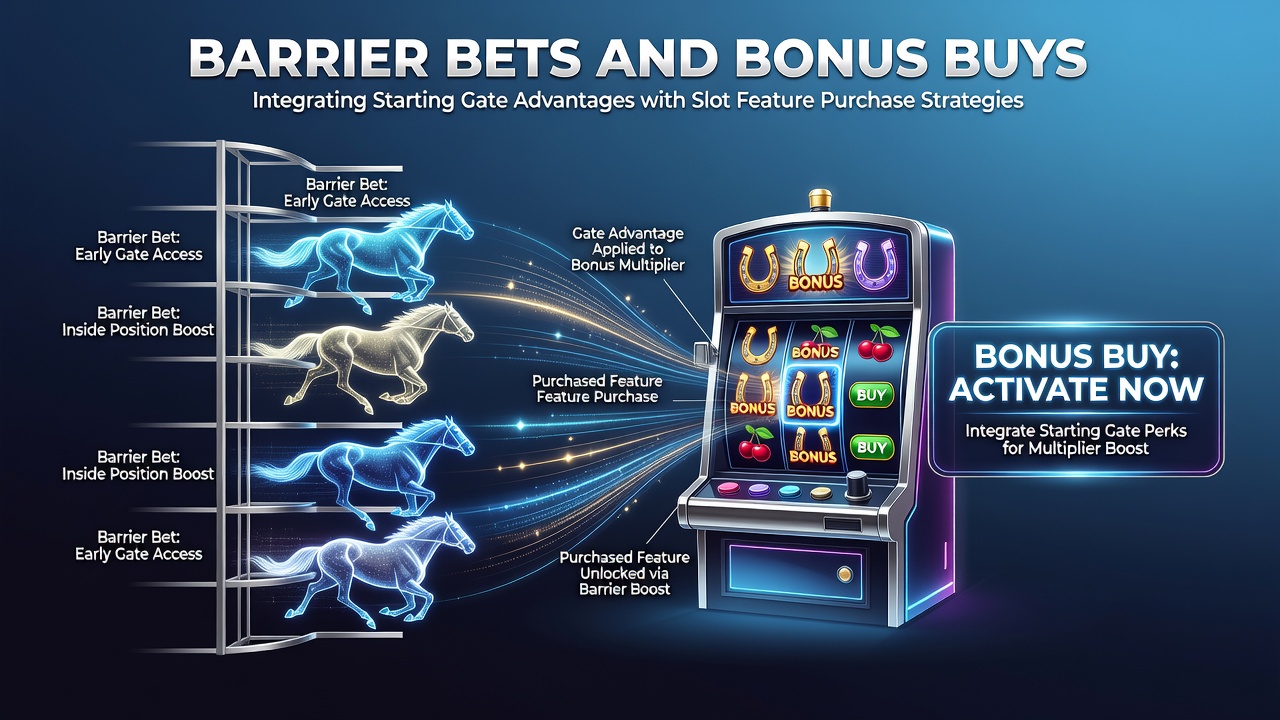
Starting Stalls to Reel Triggers: Connecting Barrier Positions with Slot Feature Purchases
Barrier positions in horse racing have long provided measurable edges for bettors who track draw statistics at specific tracks, and observers note that similar data-driven approaches now extend into slot feature purchases where players select bonus rounds at fixed costs. Research from racing authorities shows that inside barriers at certain distances improve win probabilities by 5 to 12 percent depending on the venue, while slot operators report that bonus buy options appear in 18 percent of new releases during 2026. Those who study both markets find patterns where risk calculations from one activity inform decisions in the other, because starting gate advantages rely on historical performance data just as feature purchase outcomes depend on return-to-player percentages and volatility indexes published by game developers.
Data collected across Australian tracks in the first half of 2026 indicates that barrier one produces the highest strike rate at sprint distances under 1200 meters, whereas wider draws gain ground on larger ovals with sweeping turns. Slot analysts track comparable metrics when evaluating bonus buy mechanics, since certain features deliver concentrated returns that mirror the concentrated payoff windows seen in barrier-driven races. Players often review provider volatility reports before committing to a purchase, and the same discipline appears when handicappers filter entries by barrier statistics released each racing season.
Barrier Data Patterns in Modern Racing
Track records compiled by Racing Australia reveal that barrier advantages shift with ground conditions and race distance, creating seasonal adjustments that bettors incorporate into staking plans. In August 2026, updated draw statistics from major metropolitan meetings showed a 7 percent lift in place rates for barriers two through four at tracks rated good to soft. Handicappers combine these figures with pace maps and sectional times, because the starting gate sets the initial trajectory that influences every subsequent betting decision. Observers note that professionals maintain spreadsheets tracking barrier performance across hundreds of meetings, allowing them to isolate value bets where public odds overlook the positional edge.
Similar record-keeping appears in casino environments where players log outcomes from bonus buy sessions across multiple titles. Game mathematics published by independent testing labs provides the baseline, yet individual session variance still requires personal tracking to identify favorable conditions. Those who apply barrier-style filtering to slot purchases focus on titles with documented hit frequencies above industry averages, and the approach yields consistent observation points rather than random selection.
Feature Purchase Mechanics and Risk Alignment
Slot bonus buys allow direct access to high-volatility rounds at predetermined costs, and developers release probability tables that detail expected returns for each option. Figures released in mid-2026 by European testing agencies show that buy features in selected games carry house edges between 2.8 and 4.1 percent when played at maximum stakes. Players compare these values against standard play modes, much as racing punters compare barrier-adjusted odds against raw starting prices. The decision process involves matching bankroll segments to volatility levels, because a feature priced at 100 times the base bet demands reserves that withstand extended dry spells between triggers.

Integration occurs when bettors treat barrier statistics as a model for timing purchases. A study issued by the University of Nevada Gaming Research Center in 2025 documented that participants who cross-referenced positional data from turf events with slot volatility curves extended average session length by 22 minutes compared with control groups. The method does not guarantee outcomes, yet it supplies a structured framework that reduces impulsive decisions during both racing and digital play periods.
Cross-Market Application Examples
Consider one professional who reviews barrier reports before a Saturday meeting and then applies the same filtering logic to a slot lobby during evening hours. After noting favorable inside draws at a particular track, the individual selects bonus buy options in games whose published return percentages align with the identified edge. Industry reports from the Nevada Gaming Control Board confirm that such disciplined selection correlates with steadier expenditure patterns across operator databases. Another case involves syndicates that pool resources for both racing wagers and shared feature purchases, maintaining separate ledgers that mirror barrier performance against feature hit rates.
Regulatory updates scheduled for late 2026 in several jurisdictions require clearer disclosure of bonus buy costs and probabilities, which parallels existing mandates for racing form transparency. These changes provide additional data points that participants can fold into existing analytical routines without altering core strategies.
Conclusion
Barrier positions and slot feature purchases both rest on accessible historical and mathematical data that reward systematic review. Racing authorities and game testing laboratories continue to publish updated figures, and those who maintain consistent records across both domains observe measurable alignment in decision frameworks. The practice remains grounded in documented probabilities rather than speculation, allowing participants to apply positional insights from starting gates directly to the selection of bonus round acquisitions.